Model weights · YOLO11
Download YOLO11 weights
An anchor-free, single-pass detector that predicts objects in one shot across five vision tasks, giving a strong balance of speed and accuracy for everyday production use. Pick a size below and download the official .pt checkpoint in one click, with published COCO accuracy, size and license all in view.
Choosing between versions? Compare YOLO11 with YOLO26 before downloading weights.
Licensing. Ultralytics YOLO models are AGPL-3.0. Review Ultralytics licensing before you use them, particularly in a closed-source product, where an Enterprise license is required. Everything published on this site is released under MIT or Apache-2.0, with minimal paid features. Full licensing notes.
YOLO11 checkpoints, pick a size and download
An anchor-free, single-pass detector that predicts objects in one shot across five vision tasks, giving a strong balance of speed and accuracy for everyday production use.
- YOLO11nyolo11n.pt
- COCO mAP
- 39.5
- Params
- 2.6M
- YOLO11syolo11s.pt
- COCO mAP
- 47.0
- Params
- 9.4M
- YOLO11myolo11m.pt
- COCO mAP
- 51.5
- Params
- 20.1M
- YOLO11lyolo11l.pt
- COCO mAP
- 53.4
- Params
- 25.3M
- YOLO11xyolo11x.pt
- COCO mAP
- 54.7
- Params
- 56.9M
| Model | COCO mAP | Params | Download |
|---|---|---|---|
YOLO11n yolo11n.pt | 39.5 | 2.6M | |
YOLO11s yolo11s.pt | 47.0 | 9.4M | |
YOLO11m yolo11m.pt | 51.5 | 20.1M | |
YOLO11l yolo11l.pt | 53.4 | 25.3M | |
YOLO11x yolo11x.pt | 54.7 | 56.9M |
Scores are COCO mAP at 640px, published by the authors. Weights host: github.com. Clicking Download verifies the file and starts it straight from the official CDN.
How to load YOLO11 weights
Install the Ultralytics package, then point the loader at the checkpoint. It downloads automatically on first use, or you can pass the local path to the file you downloaded above.
pip install ultralyticsfrom ultralytics import YOLO
# Downloads on first use, or pass a local path to your .pt file
model = YOLO("yolo11n.pt")
results = model("image.jpg")Want to see the architecture? Export to ONNX and open it in the ONNX visualizer for a labelled diagram with shapes and parameter counts.
Open visualizer →Choosing a YOLO11 checkpoint
Read off the table above: what each step up the size ladder costs and returns for this family specifically, where it stops being worth it, and what the license actually permits.
What the size ladder buys
YOLO11 spans YOLO11n at 2.6M parameters to YOLO11x at 56.9M, 21.9× the model, for 15.2 more COCO mAP (39.5 to 54.7). That works out to roughly 0.28 points per additional million parameters across the whole range, and the return is front-loaded: the early steps are much cheaper than the last one. Published figures from Ultralytics at 640px, not re-measured here.
Where the ladder stops paying
The best value step is YOLO11n → YOLO11s, worth 1.10 COCO mAP points per million parameters. The worst is YOLO11l → YOLO11x at 0.04, or 27× less efficient, for 31.6M extra parameters and only 1.3 more points. If you are latency- or memory-bound, that is the step to skip; if you are accuracy-bound and the compute is free, it is the only place left to get it.
Where it sits in the catalog
Against the 8 families here that publish COCO mAP, YOLO11's best checkpoint ranks 5th at 54.7, against 57.5 for YOLO26. Read that as a tier indicator rather than a head-to-head: the families use different size ladders, input sizes and training recipes, and each number is the authors' own. The closest alternatives for object detection are YOLO26, YOLO12 and YOLOv10.
Licensing, in practice
The weights are AGPL-3.0. AGPL-3.0 is free for open-source, research and internal use; a closed-source commercial product needs an Ultralytics Enterprise license.
About YOLO11
YOLO11 is the mainstream Ultralytics model: anchor-free, well-documented, and supporting all five vision tasks. Its C3k2 blocks and C2PSA attention let YOLO11m match YOLOv8m accuracy with about 22% fewer parameters, which makes it the safe, best-supported default for most production work today.
- Author
- Ultralytics
- Released
- 2024
- Tasks
- Detect, Segment, Classify, Pose, OBB
- Framework
- Ultralytics (PyTorch)
- Input size
- 640px
- License
- AGPL-3.0
More model weights to download
Each page lists every checkpoint with accuracy, parameters, license and a one-click download.
From the blog
Tutorials, code, and notes on computer vision, deep learning, and applied AI.
 Depth EstimationJuly 27, 2026
Video Depth Anything in Python: consistent depth for video
 YOLO26July 19, 2026
YOLO26 vs YOLO11 vs YOLOv8: which one should you use?
 Object TrackingJuly 18, 2026
How to use ByteTrack with YOLO for object tracking in Python
 Semantic SearchJuly 6, 2026
Build a semantic image search engine with CLIP and Python
 YOLO26July 3, 2026
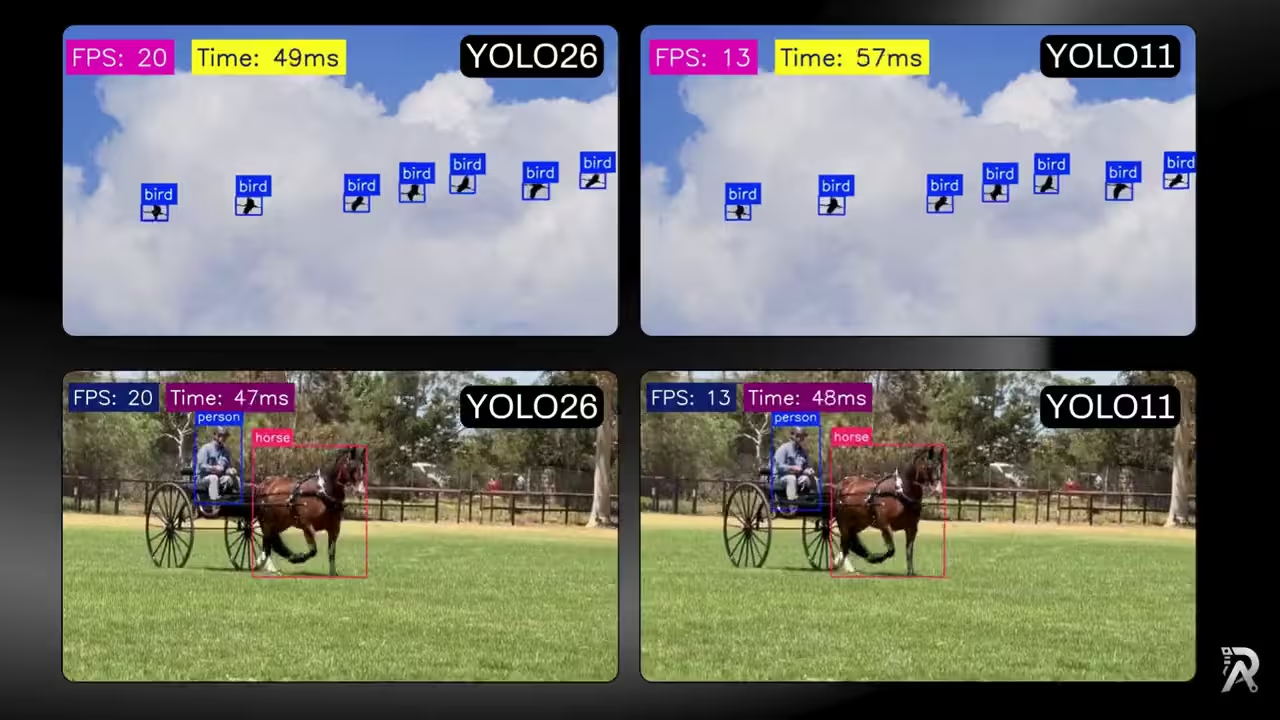
YOLO26 vs YOLO11: ONNX speed, FPS and latency benchmark
 Depth EstimationJuly 1, 2026
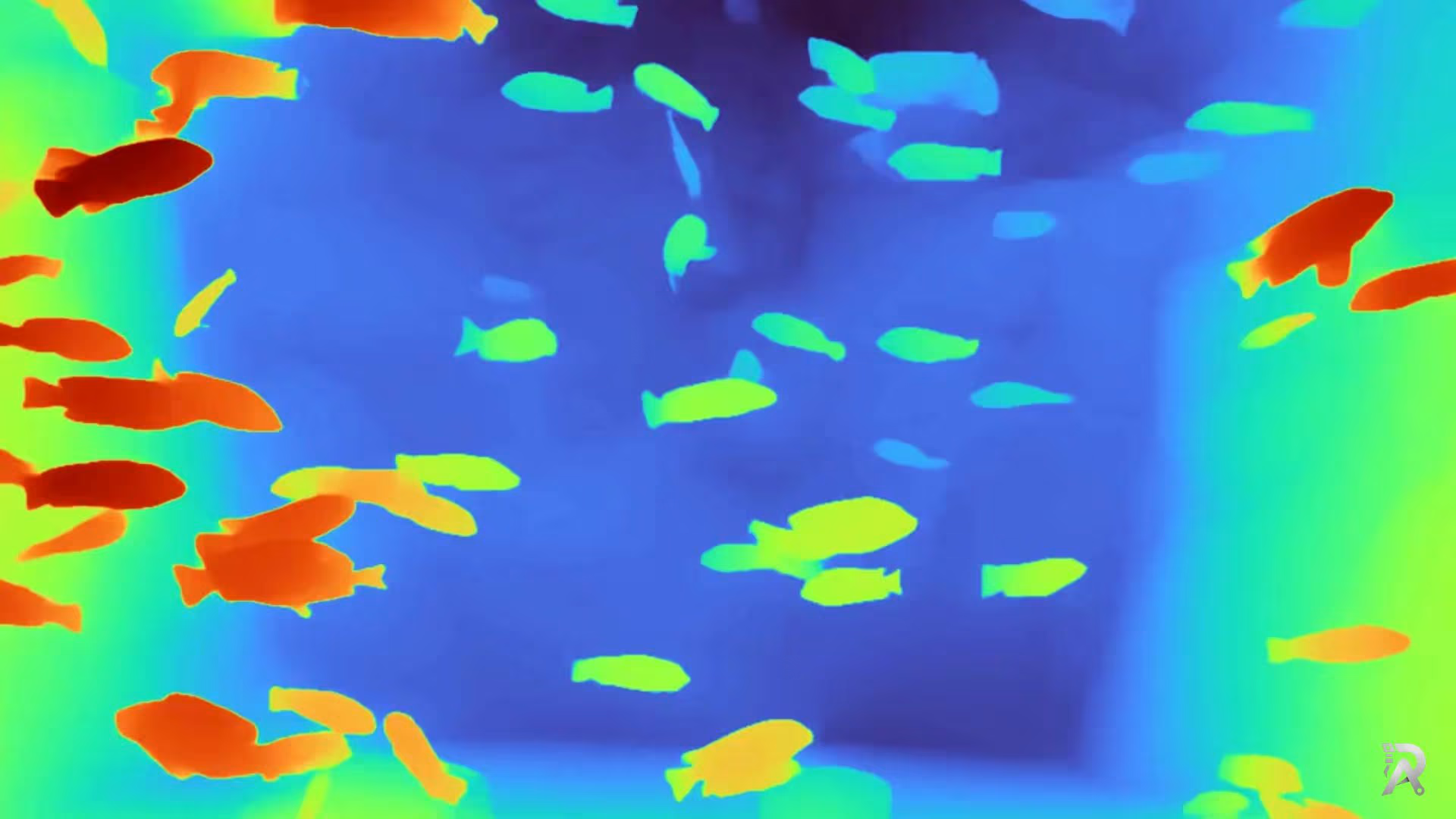
Depth Anything V2 in Python: depth from image, video or webcam
 Object TrackingJune 27, 2026
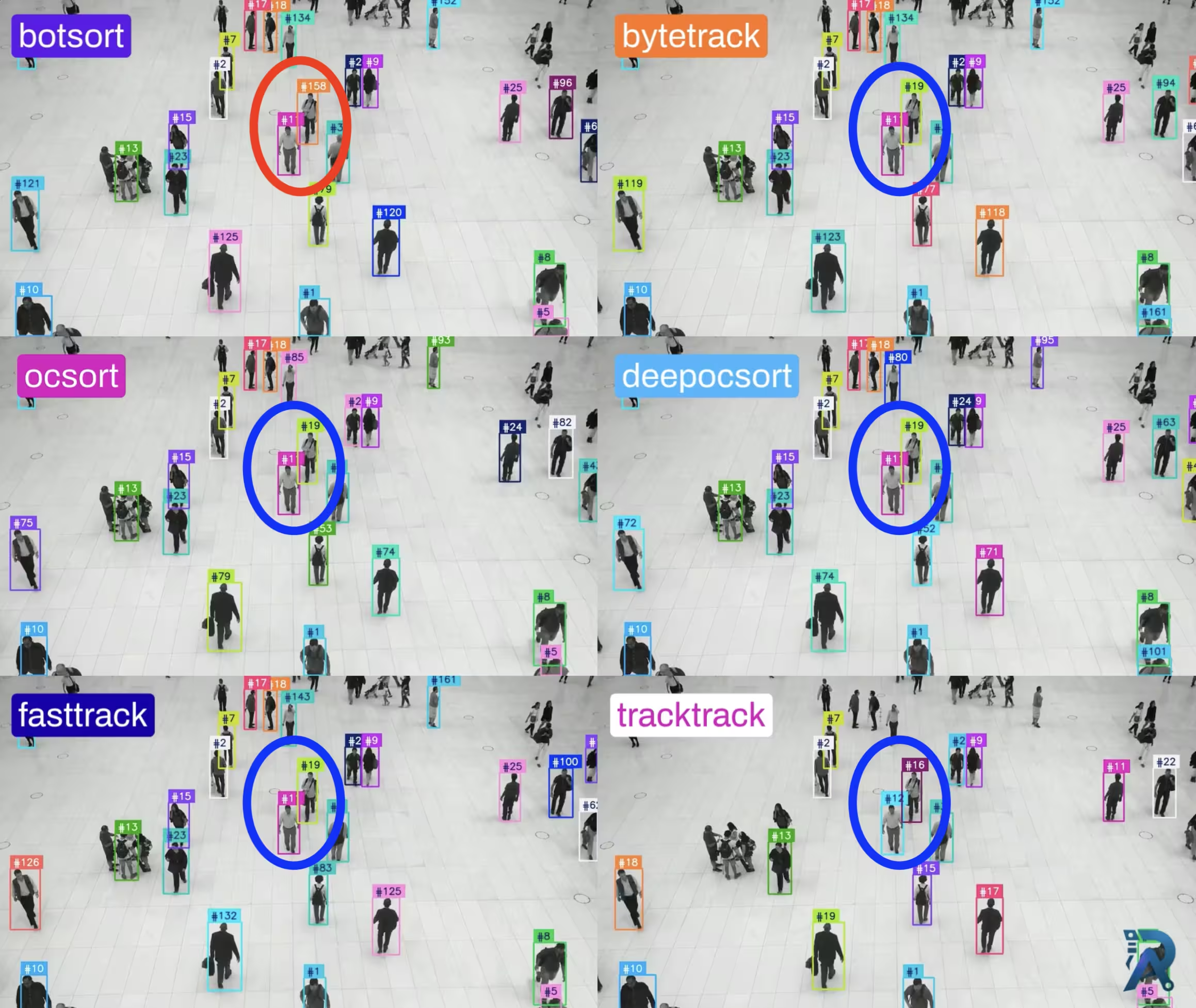
Ultralytics object trackers comparison: ByteTrack, BoT-SORT & More
 OCRJune 26, 2026
How to extract text from images with LightOnOCR and Python
Frequently asked questions
- How do I download YOLO11 weights?
- Click the Download button next to any variant in the table above; we verify the file and start it straight from the official CDN. You can also let the loader fetch it automatically on first use with `model = YOLO("yolo11n.pt")`. All 5 YOLO11 checkpoints are hosted officially.
- Is YOLO11 free for commercial use?
- YOLO11 is released under AGPL-3.0. That is free for open-source and research; closed-source commercial deployments need an Ultralytics Enterprise license. Always confirm against the linked license text.
- Which YOLO11 model size should I use?
- Start with YOLO11n, the smallest and fastest, ideal for prototyping, edge and CPU. Move up the ladder only when you need more accuracy and have the compute for it. The largest variant reaches 54.7 COCO mAP.