Model zoo · 19 families · 96 checkpoints
Computer vision models and pretrained weights, free to download
A curated model zoo covering detection, instance segmentation, pose estimation, oriented boxes, classification, open-vocabulary detection, promptable segmentation and monocular depth. Every major YOLO generation (YOLOv5 through YOLO26 plus YOLO12), RT-DETR, YOLO-World, YOLOE, the Segment Anything family (SAM, SAM 2.1, MobileSAM, FastSAM) and Depth Anything V2, each variant listed with published accuracy, parameters, license and a one-click download.
Direct weight downloads, every link checked against the official host.
YOLO detectors, task heads, RT-DETR, open-vocab, SAM and Depth Anything.
Distinct tasks in the catalog, from object detection to monocular depth.
Ultralytics, Meta AI, Baidu, Apple and the original research labs.
2.0M parameters, and usually the right first download.
mAP50-95 from YOLO26 at 640px, as published by Ultralytics.
Families shipping Apache-2.0 or MIT weights, before the loader's own terms.
The catalog tracks each family's own release year, not the date it was listed.
Showing 19 of 19 model families
Licensing. Ultralytics YOLO models are AGPL-3.0. Review Ultralytics licensing before you use them, particularly in a closed-source product, where an Enterprise license is required. Everything published on this site is released under MIT or Apache-2.0, with minimal paid features. Full licensing notes.
YOLO detectors
A single-stage detector that outputs final boxes directly, with no separate NMS cleanup step, so it runs faster on CPUs and edge devices while keeping top accuracy.
- YOLO26nyolo26n.pt
- COCO mAP
- 40.9
- Params
- 2.4M
- YOLO26syolo26s.pt
- COCO mAP
- 48.6
- Params
- 9.5M
- YOLO26myolo26m.pt
- COCO mAP
- 53.1
- Params
- 20.4M
- YOLO26lyolo26l.pt
- COCO mAP
- 55.0
- Params
- 24.8M
- YOLO26xyolo26x.pt
- COCO mAP
- 57.5
- Params
- 55.7M
| Model | COCO mAP | Params | Download |
|---|---|---|---|
YOLO26n yolo26n.pt | 40.9 | 2.4M | |
YOLO26s yolo26s.pt | 48.6 | 9.5M | |
YOLO26m yolo26m.pt | 53.1 | 20.4M | |
YOLO26l yolo26l.pt | 55.0 | 24.8M | |
YOLO26x yolo26x.pt | 57.5 | 55.7M |
An anchor-free, single-pass detector that predicts objects in one shot across five vision tasks, giving a strong balance of speed and accuracy for everyday production use.
- YOLO11nyolo11n.pt
- COCO mAP
- 39.5
- Params
- 2.6M
- YOLO11syolo11s.pt
- COCO mAP
- 47.0
- Params
- 9.4M
- YOLO11myolo11m.pt
- COCO mAP
- 51.5
- Params
- 20.1M
- YOLO11lyolo11l.pt
- COCO mAP
- 53.4
- Params
- 25.3M
- YOLO11xyolo11x.pt
- COCO mAP
- 54.7
- Params
- 56.9M
| Model | COCO mAP | Params | Download |
|---|---|---|---|
YOLO11n yolo11n.pt | 39.5 | 2.6M | |
YOLO11s yolo11s.pt | 47.0 | 9.4M | |
YOLO11m yolo11m.pt | 51.5 | 20.1M | |
YOLO11l yolo11l.pt | 53.4 | 25.3M | |
YOLO11x yolo11x.pt | 54.7 | 56.9M |
An attention-centric YOLO: area attention and residual ELAN blocks replace some of the pure-convolution stack, buying about a point of mAP over YOLO11 at a similar size.
- YOLO12nyolo12n.pt
- COCO mAP
- 40.6
- Params
- 2.6M
- Size
- 5.3 MB
- YOLO12syolo12s.pt
- COCO mAP
- 48.0
- Params
- 9.3M
- Size
- 18.1 MB
- YOLO12myolo12m.pt
- COCO mAP
- 52.5
- Params
- 20.2M
- Size
- 39 MB
- YOLO12lyolo12l.pt
- COCO mAP
- 53.7
- Params
- 26.4M
- Size
- 51.2 MB
- YOLO12xyolo12x.pt
- COCO mAP
- 55.2
- Params
- 59.1M
- Size
- 113.8 MB
| Model | COCO mAP | Params | Size | Download |
|---|---|---|---|---|
YOLO12n yolo12n.pt | 40.6 | 2.6M | 5.3 MB | |
YOLO12s yolo12s.pt | 48.0 | 9.3M | 18.1 MB | |
YOLO12m yolo12m.pt | 52.5 | 20.2M | 39 MB | |
YOLO12l yolo12l.pt | 53.7 | 26.4M | 51.2 MB | |
YOLO12x yolo12x.pt | 55.2 | 59.1M | 113.8 MB |
The first widely used YOLO that skips the NMS post-processing step, using paired training heads so inference is truly end to end and low latency.
- YOLOv10nyolov10n.pt
- COCO mAP
- 38.5
- Params
- 2.3M
- YOLOv10syolov10s.pt
- COCO mAP
- 46.3
- Params
- 7.2M
- YOLOv10myolov10m.pt
- COCO mAP
- 51.1
- Params
- 15.4M
- YOLOv10byolov10b.pt
- COCO mAP
- 52.5
- Params
- 19.1M
- YOLOv10lyolov10l.pt
- COCO mAP
- 53.2
- Params
- 24.4M
- YOLOv10xyolov10x.pt
- COCO mAP
- 54.4
- Params
- 29.5M
| Model | COCO mAP | Params | Download |
|---|---|---|---|
YOLOv10n yolov10n.pt | 38.5 | 2.3M | |
YOLOv10s yolov10s.pt | 46.3 | 7.2M | |
YOLOv10m yolov10m.pt | 51.1 | 15.4M | |
YOLOv10b yolov10b.pt | 52.5 | 19.1M | |
YOLOv10l yolov10l.pt | 53.2 | 24.4M | |
YOLOv10x yolov10x.pt | 54.4 | 29.5M |
Adds Programmable Gradient Information and the GELAN backbone to preserve detail through deep layers, reaching high accuracy with very few parameters.
- YOLOv9tyolov9t.pt
- COCO mAP
- 38.3
- Params
- 2M
- YOLOv9syolov9s.pt
- COCO mAP
- 46.8
- Params
- 7.2M
- YOLOv9myolov9m.pt
- COCO mAP
- 51.4
- Params
- 20.1M
- YOLOv9cyolov9c.pt
- COCO mAP
- 53.0
- Params
- 25.5M
- YOLOv9eyolov9e.pt
- COCO mAP
- 55.6
- Params
- 58.1M
| Model | COCO mAP | Params | Download |
|---|---|---|---|
YOLOv9t yolov9t.pt | 38.3 | 2M | |
YOLOv9s yolov9s.pt | 46.8 | 7.2M | |
YOLOv9m yolov9m.pt | 51.4 | 20.1M | |
YOLOv9c yolov9c.pt | 53.0 | 25.5M | |
YOLOv9e yolov9e.pt | 55.6 | 58.1M |
The anchor-free model that made multi-task YOLO mainstream: one architecture for detection, segmentation, pose, classification and OBB, with the largest ecosystem.
- YOLOv8nyolov8n.pt
- COCO mAP
- 37.3
- Params
- 3.2M
- YOLOv8syolov8s.pt
- COCO mAP
- 44.9
- Params
- 11.2M
- YOLOv8myolov8m.pt
- COCO mAP
- 50.2
- Params
- 25.9M
- YOLOv8lyolov8l.pt
- COCO mAP
- 52.9
- Params
- 43.7M
- YOLOv8xyolov8x.pt
- COCO mAP
- 53.9
- Params
- 68.2M
| Model | COCO mAP | Params | Download |
|---|---|---|---|
YOLOv8n yolov8n.pt | 37.3 | 3.2M | |
YOLOv8s yolov8s.pt | 44.9 | 11.2M | |
YOLOv8m yolov8m.pt | 50.2 | 25.9M | |
YOLOv8l yolov8l.pt | 52.9 | 43.7M | |
YOLOv8x yolov8x.pt | 53.9 | 68.2M |
The anchor-free v5u retrain of the classic PyTorch YOLO, keeping its easy training and export while adopting the newer YOLOv8 detection head for better accuracy.
- YOLOv5nuyolov5nu.pt
- COCO mAP
- 34.3
- Params
- 2.6M
- YOLOv5suyolov5su.pt
- COCO mAP
- 43.0
- Params
- 9.1M
- YOLOv5muyolov5mu.pt
- COCO mAP
- 49.0
- Params
- 25.1M
- YOLOv5luyolov5lu.pt
- COCO mAP
- 52.2
- Params
- 53.2M
- YOLOv5xuyolov5xu.pt
- COCO mAP
- 53.2
- Params
- 97.2M
| Model | COCO mAP | Params | Download |
|---|---|---|---|
YOLOv5nu yolov5nu.pt | 34.3 | 2.6M | |
YOLOv5su yolov5su.pt | 43.0 | 9.1M | |
YOLOv5mu yolov5mu.pt | 49.0 | 25.1M | |
YOLOv5lu yolov5lu.pt | 52.2 | 53.2M | |
YOLOv5xu yolov5xu.pt | 53.2 | 97.2M |
Detection transformers
A transformer detector built for real time: an efficient hybrid encoder replaces hand-tuned anchors and NMS, matching YOLO speed at higher accuracy under a permissive license.
- RT-DETR-Lrtdetr-l.pt
- COCO mAP
- 53.0
- Params
- 32M
- RT-DETR-Xrtdetr-x.pt
- COCO mAP
- 54.8
- Params
- 67M
| Model | COCO mAP | Params | Download |
|---|---|---|---|
RT-DETR-L rtdetr-l.pt | 53.0 | 32M | |
RT-DETR-X rtdetr-x.pt | 54.8 | 67M |
Open-vocabulary
Fuses a YOLO detector with CLIP text embeddings, so you can detect any object by typing its name, with no retraining. This is called open-vocabulary detection.
- YOLOv8s-worldv2yolov8s-worldv2.pt
- Params
- 12.7M
- YOLOv8m-worldv2yolov8m-worldv2.pt
- Params
- 28.4M
- YOLOv8l-worldv2yolov8l-worldv2.pt
- Params
- 46.8M
- YOLOv8x-worldv2yolov8x-worldv2.pt
- Params
- 72.9M
| Model | Params | Download |
|---|---|---|
YOLOv8s-worldv2 yolov8s-worldv2.pt | 12.7M | |
YOLOv8m-worldv2 yolov8m-worldv2.pt | 28.4M | |
YOLOv8l-worldv2 yolov8l-worldv2.pt | 46.8M | |
YOLOv8x-worldv2 yolov8x-worldv2.pt | 72.9M |
YOLOE
Tsinghua University (THU-MIG) · 2025 · Open-vocabulary detection & segmentation · 22 variants
An open-vocabulary detector and instance segmenter: name a class in plain text, give it a visual example, or run its built-in vocabulary prompt-free, and it finds and masks the objects, at YOLO speed.
- YOLOE-11S-segyoloe-11s-seg.pt
- YOLOE-11M-segyoloe-11m-seg.pt
- YOLOE-11L-segyoloe-11l-seg.pt
- LVIS mAP
- 35.2
- Params
- 26.2M
- YOLOE-v8S-segyoloe-v8s-seg.pt
- YOLOE-v8M-segyoloe-v8m-seg.pt
- YOLOE-v8L-segyoloe-v8l-seg.pt
- YOLOE-26N-segyoloe-26n-seg.pt
- YOLOE-26S-segyoloe-26s-seg.pt
- LVIS mAP
- 29.9
- YOLOE-26M-segyoloe-26m-seg.pt
- YOLOE-26L-segyoloe-26l-seg.pt
- LVIS mAP
- 36.8
- Params
- 32.3M
- YOLOE-26X-segyoloe-26x-seg.pt
- YOLOE-11S-seg · prompt-freeyoloe-11s-seg-pf.pt
- YOLOE-11M-seg · prompt-freeyoloe-11m-seg-pf.pt
- YOLOE-11L-seg · prompt-freeyoloe-11l-seg-pf.pt
- YOLOE-v8S-seg · prompt-freeyoloe-v8s-seg-pf.pt
- YOLOE-v8M-seg · prompt-freeyoloe-v8m-seg-pf.pt
- YOLOE-v8L-seg · prompt-freeyoloe-v8l-seg-pf.pt
- YOLOE-26N-seg · prompt-freeyoloe-26n-seg-pf.pt
- YOLOE-26S-seg · prompt-freeyoloe-26s-seg-pf.pt
- YOLOE-26M-seg · prompt-freeyoloe-26m-seg-pf.pt
- YOLOE-26L-seg · prompt-freeyoloe-26l-seg-pf.pt
- YOLOE-26X-seg · prompt-freeyoloe-26x-seg-pf.pt
| Model | LVIS mAP | Params | Download |
|---|---|---|---|
YOLOE-11S-seg yoloe-11s-seg.pt | |||
YOLOE-11M-seg yoloe-11m-seg.pt | |||
YOLOE-11L-seg yoloe-11l-seg.pt | 35.2 | 26.2M | |
YOLOE-v8S-seg yoloe-v8s-seg.pt | |||
YOLOE-v8M-seg yoloe-v8m-seg.pt | |||
YOLOE-v8L-seg yoloe-v8l-seg.pt | |||
YOLOE-26N-seg yoloe-26n-seg.pt | |||
YOLOE-26S-seg yoloe-26s-seg.pt | 29.9 | ||
YOLOE-26M-seg yoloe-26m-seg.pt | |||
YOLOE-26L-seg yoloe-26l-seg.pt | 36.8 | 32.3M | |
YOLOE-26X-seg yoloe-26x-seg.pt | |||
YOLOE-11S-seg · prompt-free yoloe-11s-seg-pf.pt | |||
YOLOE-11M-seg · prompt-free yoloe-11m-seg-pf.pt | |||
YOLOE-11L-seg · prompt-free yoloe-11l-seg-pf.pt | |||
YOLOE-v8S-seg · prompt-free yoloe-v8s-seg-pf.pt | |||
YOLOE-v8M-seg · prompt-free yoloe-v8m-seg-pf.pt | |||
YOLOE-v8L-seg · prompt-free yoloe-v8l-seg-pf.pt | |||
YOLOE-26N-seg · prompt-free yoloe-26n-seg-pf.pt | |||
YOLOE-26S-seg · prompt-free yoloe-26s-seg-pf.pt | |||
YOLOE-26M-seg · prompt-free yoloe-26m-seg-pf.pt | |||
YOLOE-26L-seg · prompt-free yoloe-26l-seg-pf.pt | |||
YOLOE-26X-seg · prompt-free yoloe-26x-seg-pf.pt |
YOLOE encodes text prompts with Apple's MobileCLIP (MIT-licensed). Ultralytics downloads mobileclip_blt.ts automatically on first use, and it is fetched alongside any text-prompt checkpoint here. The prompt-free (-pf) checkpoints don't need it.
Instance segmentation
Instance segmentation checkpoints: every detection comes back with a per-object mask instead of a rectangle, so area, shape and precise redaction are all measurable.
- YOLO26n-segyolo26n-seg.pt
- COCO mask mAP
- 33.9
- Params
- 2.7M
- Size
- 6.4 MB
- YOLO26s-segyolo26s-seg.pt
- COCO mask mAP
- 40.0
- Params
- 10.4M
- Size
- 22.4 MB
- YOLO26m-segyolo26m-seg.pt
- COCO mask mAP
- 44.1
- Params
- 23.6M
- Size
- 52.2 MB
- YOLO26l-segyolo26l-seg.pt
- COCO mask mAP
- 45.5
- Params
- 28M
- Size
- 60.7 MB
- YOLO26x-segyolo26x-seg.pt
- COCO mask mAP
- 47.0
- Params
- 62.8M
- Size
- 135.5 MB
| Model | COCO mask mAP | Params | Size | Download |
|---|---|---|---|---|
YOLO26n-seg yolo26n-seg.pt | 33.9 | 2.7M | 6.4 MB | |
YOLO26s-seg yolo26s-seg.pt | 40.0 | 10.4M | 22.4 MB | |
YOLO26m-seg yolo26m-seg.pt | 44.1 | 23.6M | 52.2 MB | |
YOLO26l-seg yolo26l-seg.pt | 45.5 | 28M | 60.7 MB | |
YOLO26x-seg yolo26x-seg.pt | 47.0 | 62.8M | 135.5 MB |
Pose estimation
Human pose checkpoints: each detected person comes back as 17 COCO keypoints, so posture, ergonomics, rep counting and safety rules become geometry.
- YOLO26n-poseyolo26n-pose.pt
- COCO pose mAP
- 57.2
- Params
- 2.9M
- Size
- 7.5 MB
- YOLO26s-poseyolo26s-pose.pt
- COCO pose mAP
- 63.0
- Params
- 10.4M
- Size
- 23 MB
- YOLO26m-poseyolo26m-pose.pt
- COCO pose mAP
- 68.8
- Params
- 21.5M
- Size
- 46.8 MB
- YOLO26l-poseyolo26l-pose.pt
- COCO pose mAP
- 70.4
- Params
- 25.9M
- Size
- 55.3 MB
- YOLO26x-poseyolo26x-pose.pt
- COCO pose mAP
- 71.6
- Params
- 57.6M
- Size
- 120.4 MB
| Model | COCO pose mAP | Params | Size | Download |
|---|---|---|---|---|
YOLO26n-pose yolo26n-pose.pt | 57.2 | 2.9M | 7.5 MB | |
YOLO26s-pose yolo26s-pose.pt | 63.0 | 10.4M | 23 MB | |
YOLO26m-pose yolo26m-pose.pt | 68.8 | 21.5M | 46.8 MB | |
YOLO26l-pose yolo26l-pose.pt | 70.4 | 25.9M | 55.3 MB | |
YOLO26x-pose yolo26x-pose.pt | 71.6 | 57.6M | 120.4 MB |
Oriented detection
Oriented bounding boxes: each detection carries a rotation angle, so a diagonal ship, plane or pallet is enclosed tightly instead of by a box mostly full of background.
- YOLO26n-obbyolo26n-obb.pt
- DOTAv1 mAP50
- 78.9
- Params
- 2.5M
- Size
- 5.6 MB
- YOLO26s-obbyolo26s-obb.pt
- DOTAv1 mAP50
- 80.9
- Params
- 9.8M
- Size
- 20.7 MB
- YOLO26m-obbyolo26m-obb.pt
- DOTAv1 mAP50
- 81.0
- Params
- 21.2M
- Size
- 46.1 MB
- YOLO26l-obbyolo26l-obb.pt
- DOTAv1 mAP50
- 81.6
- Params
- 25.6M
- Size
- 54.6 MB
- YOLO26x-obbyolo26x-obb.pt
- DOTAv1 mAP50
- 81.7
- Params
- 57.6M
- Size
- 121.1 MB
| Model | DOTAv1 mAP50 | Params | Size | Download |
|---|---|---|---|---|
YOLO26n-obb yolo26n-obb.pt | 78.9 | 2.5M | 5.6 MB | |
YOLO26s-obb yolo26s-obb.pt | 80.9 | 9.8M | 20.7 MB | |
YOLO26m-obb yolo26m-obb.pt | 81.0 | 21.2M | 46.1 MB | |
YOLO26l-obb yolo26l-obb.pt | 81.6 | 25.6M | 54.6 MB | |
YOLO26x-obb yolo26x-obb.pt | 81.7 | 57.6M | 121.1 MB |
Image classification
Whole-image classification checkpoints, pretrained on ImageNet at 224px: one label per image, and the usual starting point for fine-tuning on your own categories.
- YOLO26n-clsyolo26n-cls.pt
- ImageNet top-1
- 71.4
- Params
- 2.8M
- Size
- 5.5 MB
- YOLO26s-clsyolo26s-cls.pt
- ImageNet top-1
- 76.0
- Params
- 6.7M
- Size
- 13 MB
- YOLO26m-clsyolo26m-cls.pt
- ImageNet top-1
- 78.1
- Params
- 11.6M
- Size
- 22.4 MB
- YOLO26l-clsyolo26l-cls.pt
- ImageNet top-1
- 79.0
- Params
- 14.1M
- Size
- 27.2 MB
- YOLO26x-clsyolo26x-cls.pt
- ImageNet top-1
- 79.9
- Params
- 29.6M
- Size
- 56.8 MB
| Model | ImageNet top-1 | Params | Size | Download |
|---|---|---|---|---|
YOLO26n-cls yolo26n-cls.pt | 71.4 | 2.8M | 5.5 MB | |
YOLO26s-cls yolo26s-cls.pt | 76.0 | 6.7M | 13 MB | |
YOLO26m-cls yolo26m-cls.pt | 78.1 | 11.6M | 22.4 MB | |
YOLO26l-cls yolo26l-cls.pt | 79.0 | 14.1M | 27.2 MB | |
YOLO26x-cls yolo26x-cls.pt | 79.9 | 29.6M | 56.8 MB |
Segment Anything
A promptable segmentation model with video memory: one click, box or mask segments an object and tracks it across frames in real time.
- SAM 2.1 tinysam2.1_t.pt
- Params
- 38.9M
- Size
- 78 MB
- SAM 2.1 smallsam2.1_s.pt
- Params
- 46M
- SAM 2.1 base+sam2.1_b.pt
- Params
- 80.8M
- Size
- 162 MB
- SAM 2.1 largesam2.1_l.pt
- Params
- 224.4M
| Model | Params | Size | Download |
|---|---|---|---|
SAM 2.1 tiny sam2.1_t.pt | 38.9M | 78 MB | |
SAM 2.1 small sam2.1_s.pt | 46M | ||
SAM 2.1 base+ sam2.1_b.pt | 80.8M | 162 MB | |
SAM 2.1 large sam2.1_l.pt | 224.4M |
The original promptable segmentation model, trained on a billion masks, that outlines any object in an image from a simple point or box prompt.
- SAM basesam_b.pt
- Params
- 93.7M
- Size
- 358 MB
- SAM largesam_l.pt
- Params
- 312.3M
- Size
- 1250 MB
| Model | Params | Size | Download |
|---|---|---|---|
SAM base sam_b.pt | 93.7M | 358 MB | |
SAM large sam_l.pt | 312.3M | 1250 MB |
MobileSAM
Kyung Hee University · 2023 · Promptable segmentation · 1 variants
SAM with its heavy image encoder distilled into a tiny one, keeping the same prompt-based masks while shrinking to a size that runs on phones and edge devices.
- MobileSAMmobile_sam.pt
- Params
- 10.1M
- Size
- 39 MB
| Model | Params | Size | Download |
|---|---|---|---|
MobileSAM mobile_sam.pt | 10.1M | 39 MB |
A CNN take on segment-anything built on YOLOv8-seg, reaching similar masks far faster than the original transformer-based SAM.
- FastSAM-sFastSAM-s.pt
- Params
- 11.8M
- FastSAM-xFastSAM-x.pt
- Params
- 72.2M
| Model | Params | Download |
|---|---|---|
FastSAM-s FastSAM-s.pt | 11.8M | |
FastSAM-x FastSAM-x.pt | 72.2M |
Depth estimation
Depth Anything V2
TikTok / HKU (Yang et al.) · 2024 · Monocular depth estimation · 3 variants
A monocular depth model. Hand it one ordinary photo and it returns a dense depth map, a per-pixel estimate of how far everything is from the camera, with no stereo rig or LiDAR.
- Depth Anything V2 Small (ViT-S)depth_anything_v2_vits.pth
- Params
- 24.8M
- Size
- 95 MB
Apache-2.0 - Depth Anything V2 Base (ViT-B)depth_anything_v2_vitb.pth
- Params
- 97.5M
- Size
- 372 MB
CC-BY-NC-4.0 - Depth Anything V2 Large (ViT-L)depth_anything_v2_vitl.pth
- Params
- 335.3M
- Size
- 1279 MB
CC-BY-NC-4.0
| Model | Params | Size | License | Download |
|---|---|---|---|---|
Depth Anything V2 Small (ViT-S) depth_anything_v2_vits.pth | 24.8M | 95 MB | Apache-2.0 | |
Depth Anything V2 Base (ViT-B) depth_anything_v2_vitb.pth | 97.5M | 372 MB | CC-BY-NC-4.0 | |
Depth Anything V2 Large (ViT-L) depth_anything_v2_vitl.pth | 335.3M | 1279 MB | CC-BY-NC-4.0 |
How to load these weights
Install the Ultralytics package, then point the loader at the checkpoint. It downloads automatically on first use, or you can pass the local path to the file you downloaded above.
pip install ultralyticsfrom ultralytics import YOLO
# Downloads on first use, or pass a local path to your .pt file
model = YOLO("yolo11n.pt")
results = model("image.jpg")Want to see the architecture? Export to ONNX and open it in the ONNX visualizer for a labelled diagram with shapes and parameter counts.
Open visualizer →Every model family
Jump straight to any family for its full write-up, FAQ and download table.
- YOLO26 weights
- YOLO11 weights
- YOLO12 weights
- YOLOv10 weights
- YOLOv9 weights
- YOLOv8 weights
- YOLOv5 (v5u) weights
- RT-DETR weights
- YOLO-World weights
- YOLOE weights
- YOLO26-seg weights
- YOLO26-pose weights
- YOLO26-obb weights
- YOLO26-cls weights
- SAM 2.1 weights
- SAM weights
- MobileSAM weights
- FastSAM weights
- Depth Anything V2 weights
From the blog
Tutorials, code, and notes on computer vision, deep learning, and applied AI.
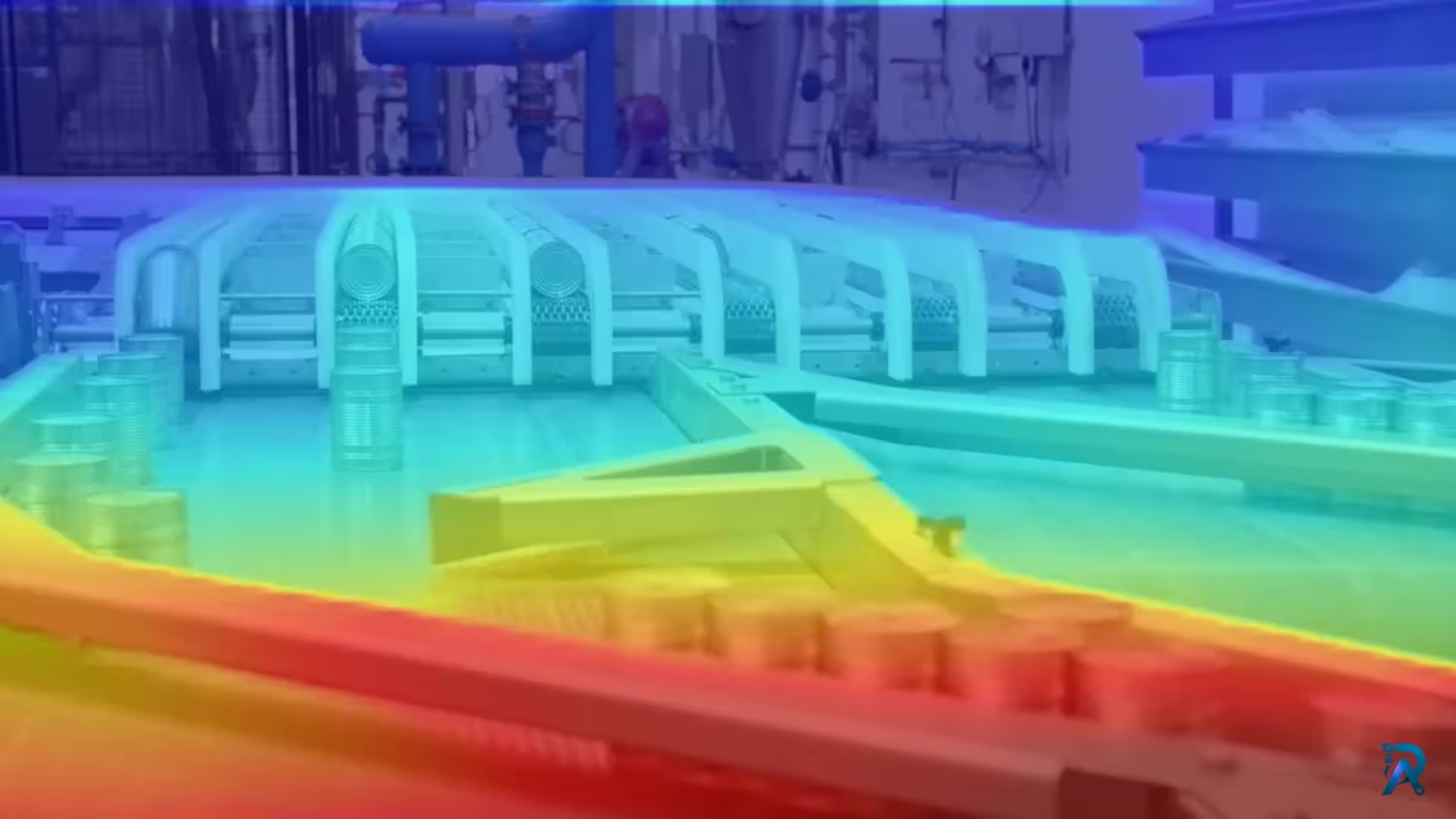 Depth EstimationJuly 27, 2026
Video Depth Anything in Python: consistent depth for video
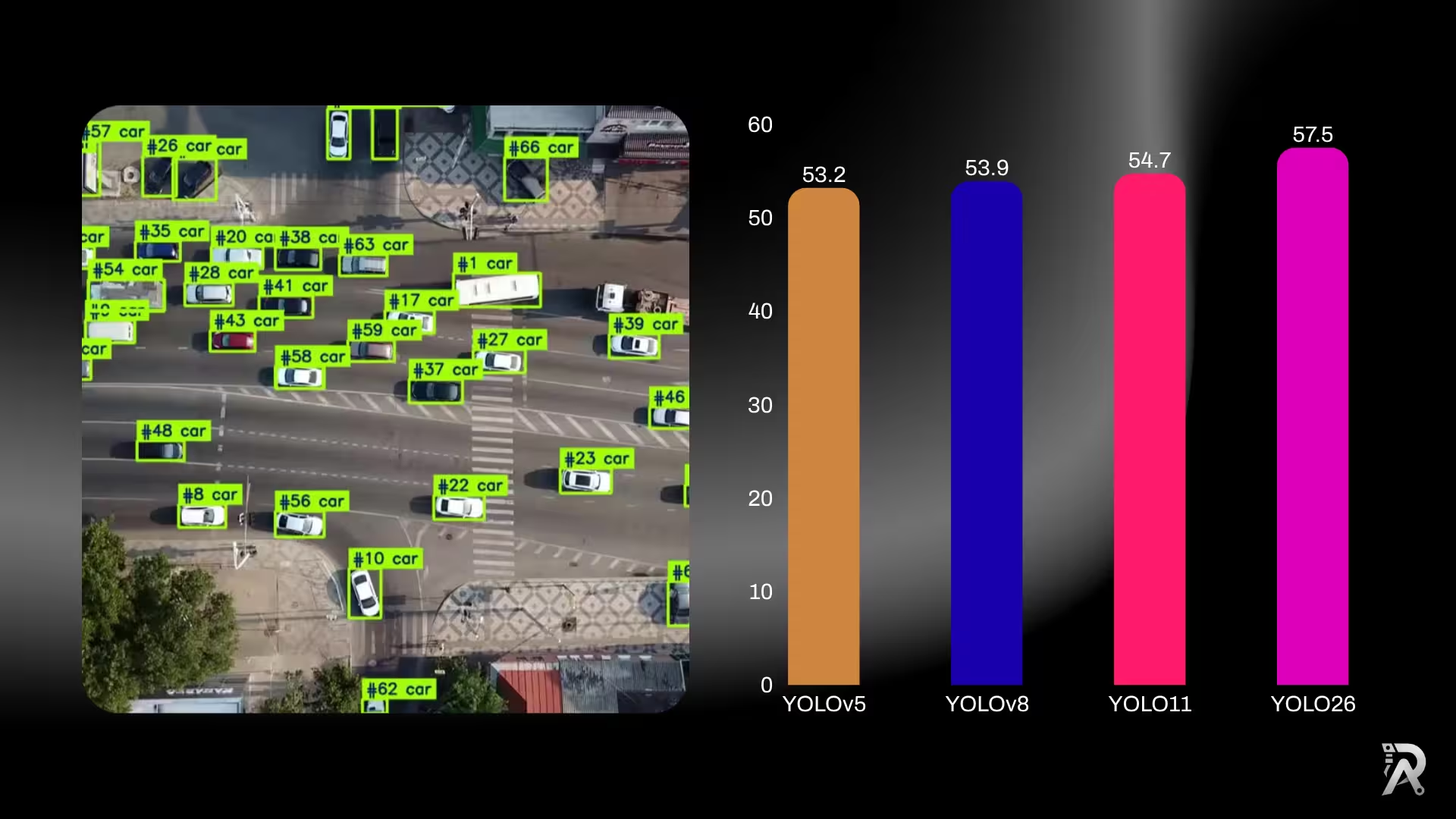 YOLO26July 19, 2026
YOLO26 vs YOLO11 vs YOLOv8: which one should you use?
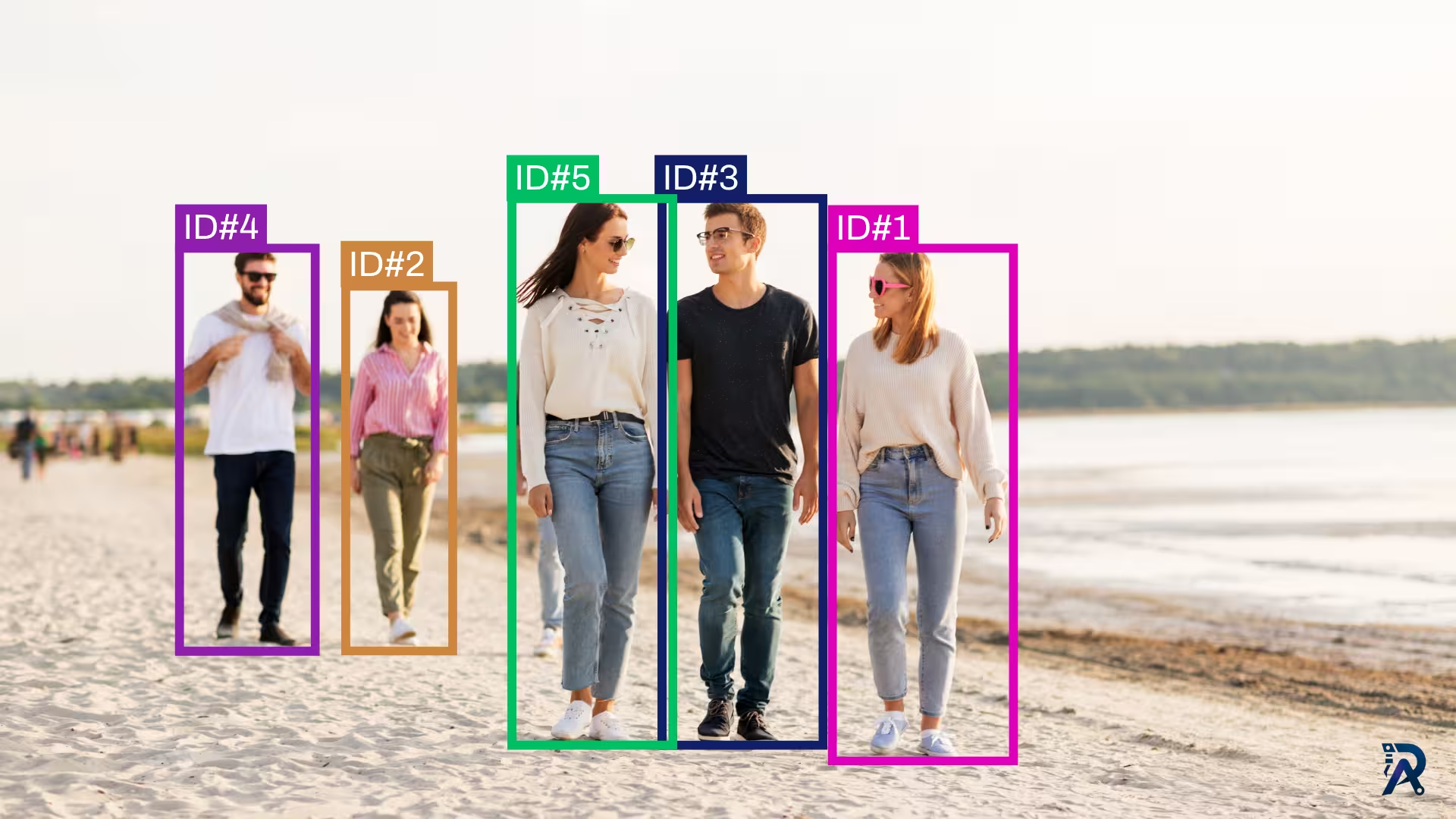 Object TrackingJuly 18, 2026
How to use ByteTrack with YOLO for object tracking in Python
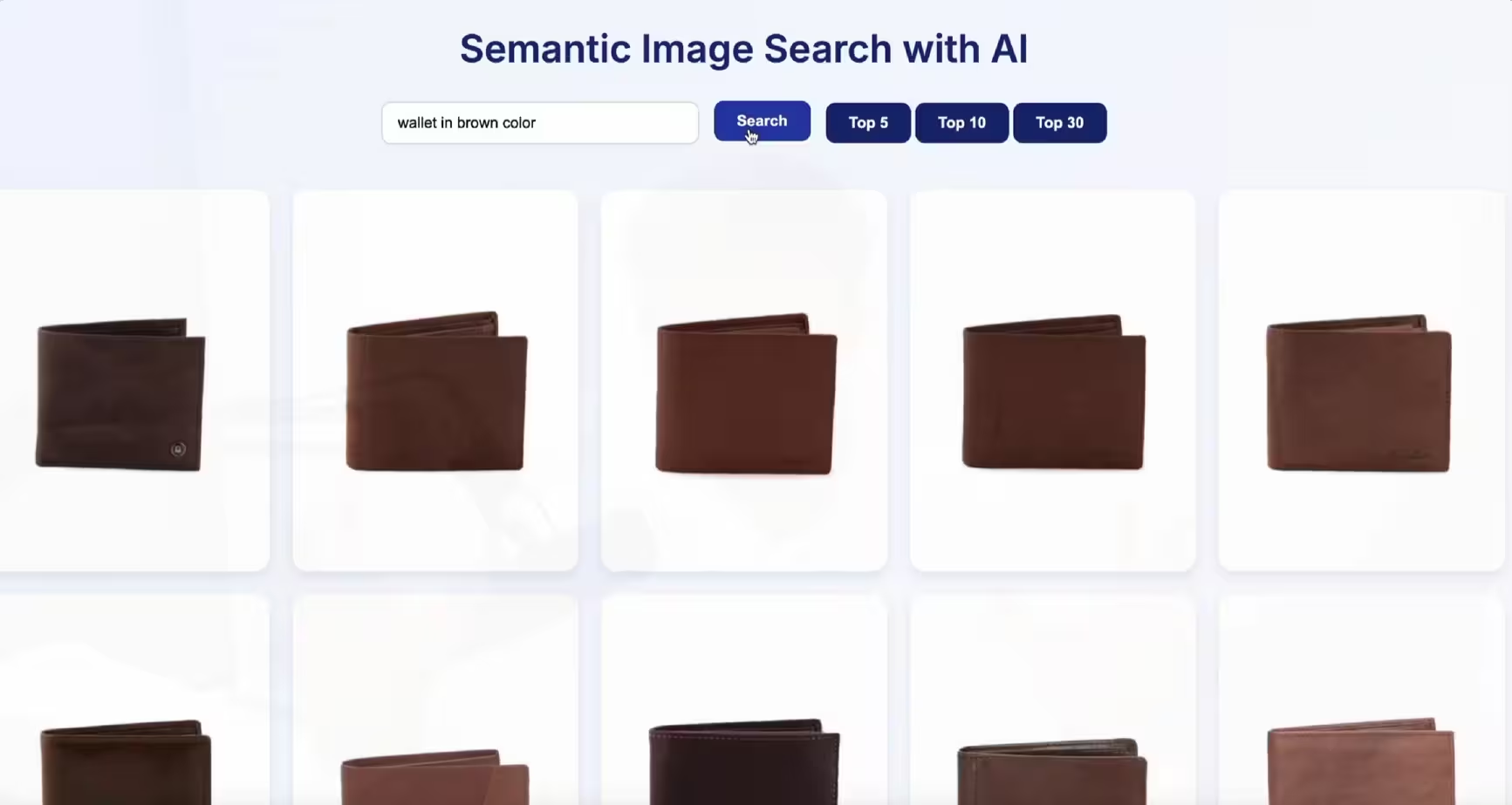 Semantic SearchJuly 6, 2026
Build a semantic image search engine with CLIP and Python
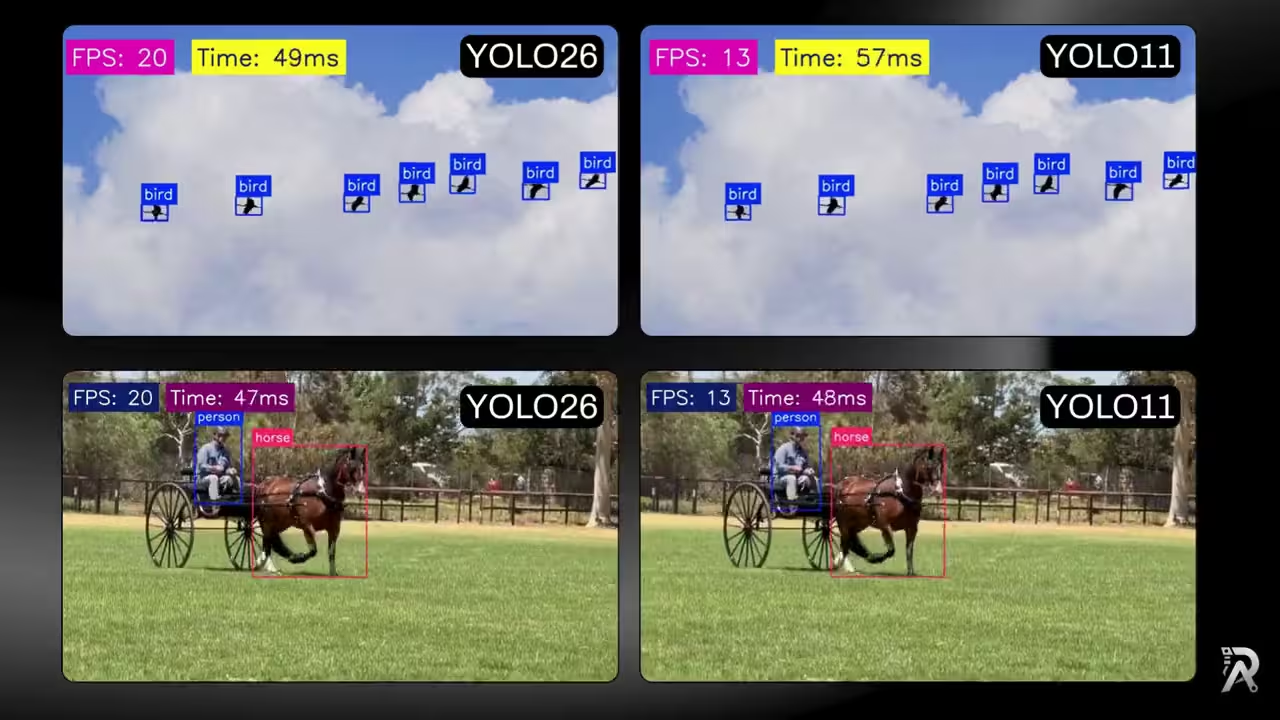 YOLO26July 3, 2026
YOLO26 vs YOLO11: ONNX speed, FPS and latency benchmark
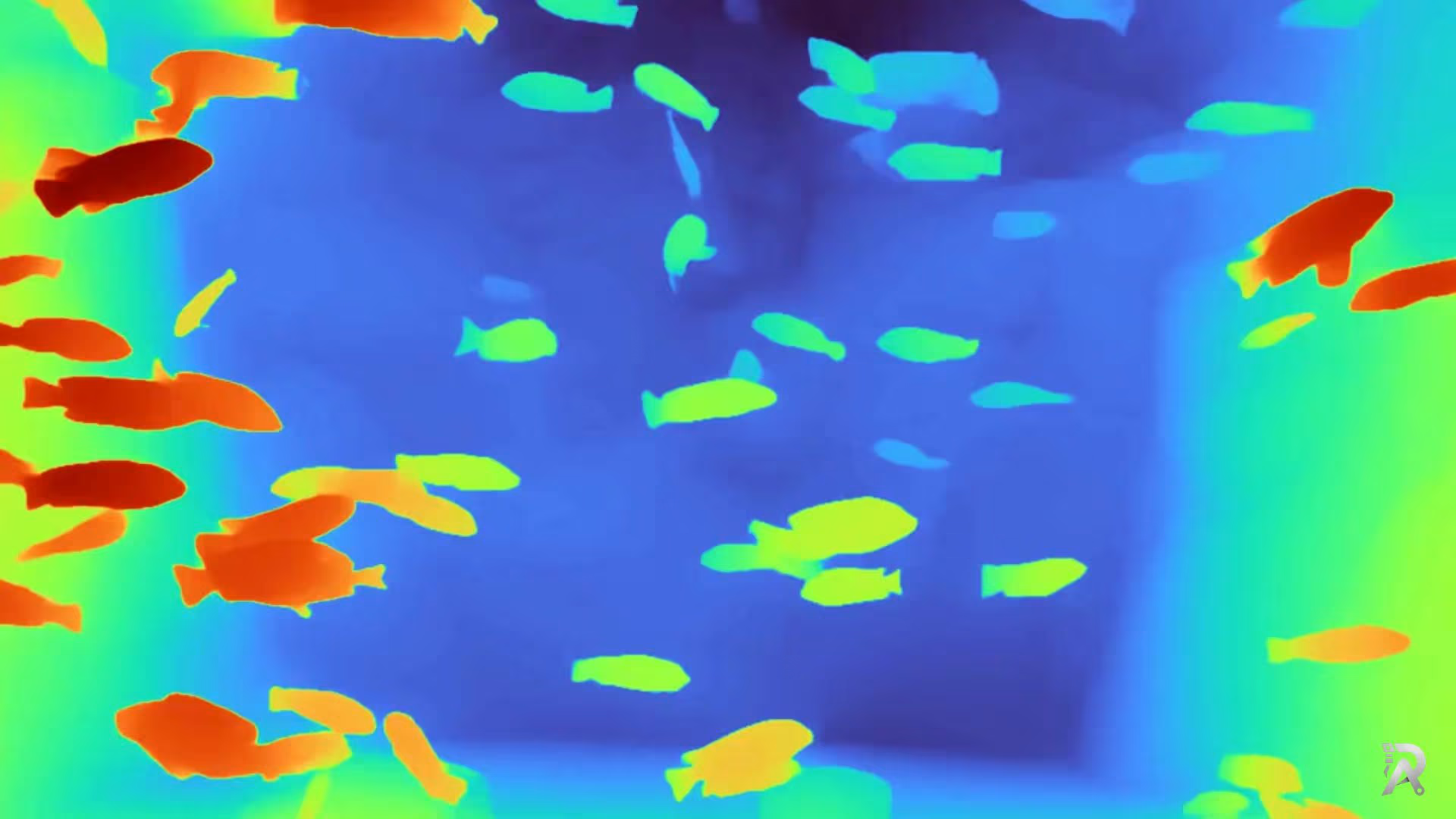 Depth EstimationJuly 1, 2026
Depth Anything V2 in Python: depth from image, video or webcam
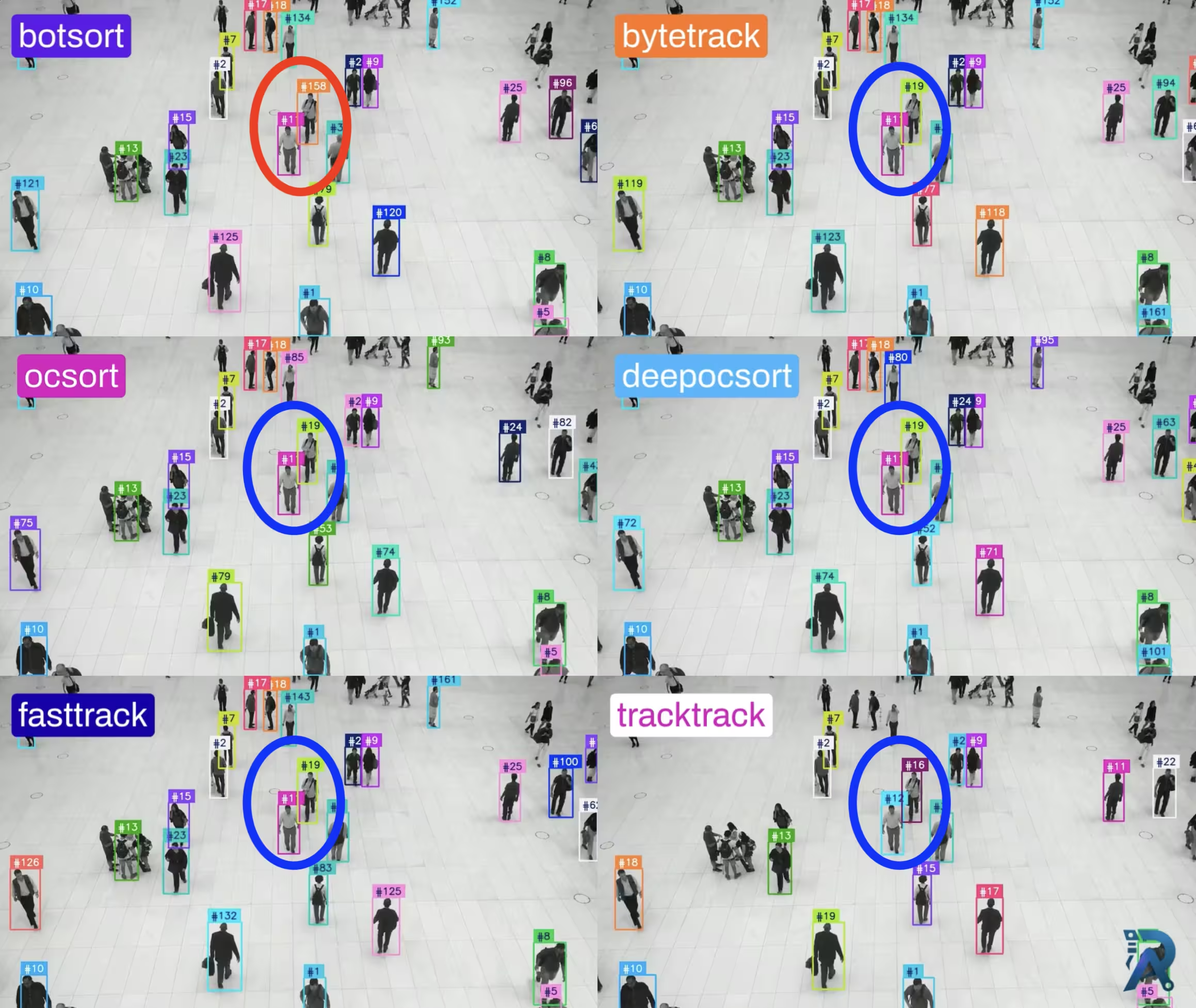 Object TrackingJune 27, 2026
Ultralytics object trackers comparison: ByteTrack, BoT-SORT & More
 OCRJune 26, 2026
How to extract text from images with LightOnOCR and Python
Frequently asked questions
- Are these computer-vision model weights free to download?
- Yes. Every checkpoint here links to the official, publicly hosted weight file, with no sign-up. What differs is the license you may use them under. Most Ultralytics YOLO weights are AGPL-3.0 (free for open-source, needs an Enterprise license for closed commercial use), while SAM, SAM 2.1, MobileSAM and RT-DETR ship under Apache-2.0. Free to download is not the same as free to ship, though. Depth Anything V2's Base and Large checkpoints are CC-BY-NC-4.0, meaning non-commercial only, even though the download itself is public. And loading an Apache-2.0 model through the Ultralytics package brings that package's AGPL-3.0 terms with it. Check the license badge on the exact variant before shipping.
- How do I download YOLO, SAM or RT-DETR weights here?
- Find the model in the table, then click the Download button on the variant you want. We first verify the file is available and then start the download straight from the official CDN, showing a confirmation popup, or the exact error if something goes wrong. You can also copy the filename and let the Ultralytics library fetch it automatically on first use.
- What is a .pt file and how do I load it?
- A .pt file is a PyTorch checkpoint containing the trained model weights. For any Ultralytics-ecosystem model you can load it in two lines: `from ultralytics import YOLO` then `model = YOLO("yolo11n.pt")`. On first use the library also downloads the file automatically, so the direct links here are for offline installs, air-gapped machines and mirroring. Not everything here is an Ultralytics model, though: Depth Anything V2 ships .pth checkpoints that load through its own repo, and each family page shows the loader that actually works for it.
- Which model weights should I download for my project?
- For general object detection start with YOLO11n or YOLO26n: small, fast, well-supported. Need commercial-friendly licensing? Use RT-DETR or SAM 2.1 (Apache-2.0). Need to segment or track anything from a prompt? Use SAM 2.1, or MobileSAM and FastSAM for the edge. Detect classes by text with no training? Use YOLO-World. The nano (n) or tiny variant is almost always the right first download.
- What accuracy do these numbers represent?
- For the detectors, the score is COCO val2017 mAP50-95 at the input size listed, as published by each model's own authors, not a benchmark re-run on this site. Cross-family numbers are indicative of tier, not a controlled head-to-head, because the families use different size ladders and training recipes. The Segment Anything models are promptable, so we list parameters and download size instead of a single accuracy figure.
- Do I need internet access to use these after downloading?
- No. Once you have the .pt file locally you can point the loader at the file path and run fully offline, which is exactly why these direct links exist. Weights are self-contained; only the first download needs a connection.