Model comparison · YOLOv8 vs YOLOv7
YOLOv8 vs YOLOv7
A head-to-head of YOLOv8 and YOLOv7: published COCO accuracy, model sizes, architecture (anchor-free, NMS-free), supported tasks and license — so you can pick the right detector for your project.
The verdict: YOLOv8 is the more accurate of the two (50.2 vs 38.7 COCO val2017 mAP50-95 @ 640px). YOLOv8 is anchor-free and YOLOv7 is anchor-based, and YOLOv8 covers 5 vision tasks to YOLOv7's 2. For a new build, YOLOv8 is the stronger pick — newer and more accurate, and at least as versatile; reach for YOLOv7 mainly for its specific ecosystem or license fit.
50.2 COCO val2017 mAP50-95 @ 640px on its YOLOv8m, versus 38.7 for YOLOv7.
Released 2023. C2f blocks + anchor-free decoupled head.
Same inference path, so export complexity is similar.
YOLOv8 vs YOLOv7: accuracy
COCO val2017 mAP50-95 @ 640px, higher is better. The number on the right is parameter count (smaller is lighter). These are the authors' published figures — indicative of tier, not a re-run benchmark.
Smallest variant (nano tier)
Medium variant
Side-by-side specs
Architecture, tasks, sizes and license for both models. Tracking (BoT-SORT / ByteTrack) is an Ultralytics ecosystem feature available to every integrated model.
| Model | Year | Anchor-free | NMS-free | Tasks | Nano mAP | Medium mAP | License |
|---|---|---|---|---|---|---|---|
| YOLOv8 | 2023 | Yes | No | 5 (Detect, Segment, Classify, Pose, OBB) | 37.3 | 50.2 | AGPL-3.0 |
| YOLOv7 | 2022 | No | No | 2 (Detect, Pose) | 38.7 | — | GPL-3.0 |
The two models in depth
YOLOv8
2023 · UltralyticsThe workhorse that made anchor-free multi-task YOLO mainstream.
YOLOv8 was the model that popularized anchor-free, multi-task YOLO across the industry. Its C2f backbone and decoupled head cover all five tasks, and years of tutorials, integrations and deployments mean it remains the most widely referenced YOLO in the wild — even as YOLO11 and YOLO26 surpass it on accuracy-per-parameter.
- Key idea
- C2f blocks + anchor-free decoupled head
- Best for
- Maximum ecosystem support and third-party integrations.
- Sizes
- n, s, m, l, x
- + Vast community, tutorials and integrations
- + All five tasks, extremely well proven
- + Stable, predictable behaviour
- − Beaten on accuracy-per-parameter by YOLO11/YOLO26
- − Heavier than newer models at the same accuracy
YOLOv7
2022 · Academia Sinica (Wang et al.)The 2022 anchor-based accuracy leader.
YOLOv7 (Academia Sinica) set the real-time detection state of the art in 2022 with trainable bag-of-freebies, model re-parameterization and E-ELAN. It's anchor-based and NMS-based, uses its own variant scheme rather than n/s/m/l/x, and its GPL-3.0 license and separate task branches make it less turnkey than the Ultralytics line.
- Key idea
- Trainable bag-of-freebies + E-ELAN + re-parameterization
- Best for
- Reproducing 2022-era research baselines.
- Sizes
- tiny, base, X, W6/E6/D6/E6E
- + Strong accuracy for its era
- + Well-cited research baseline
- − Anchor-based, NMS-based — older design
- − No clean size ladder; segmentation/pose live in side branches
- − GPL-3.0; not natively trainable in Ultralytics
Other head-to-head comparisons
More matchups involving YOLOv8 and YOLOv7, each with the same spec, accuracy and architecture breakdown.
How this comparison is built
- Published numbers only. Every mAP and parameter figure is the model authors' own published value (COCO val2017 mAP50-95 @ 640px), linked from each model's card — nothing here is measured on this site.
- Indicative, not a controlled benchmark. The families use different size ladders (YOLOv9's smallest is
t, YOLOv7 has no standard medium, YOLOv5's figures are the original anchor-based release), so cross-family mAP shows the tier, not a like-for-like race. Benchmark your shortlist on your own data. - Architecture facts. Anchor-free, NMS-free, tasks and license reflect each model as officially released.
- Want a real speed test? See the YOLO tracker benchmarks for measured FPS across 10 GPUs, or book a consultation to benchmark models on your footage.
From the blog
Tutorials, code, and notes on computer vision, deep learning, and applied AI.
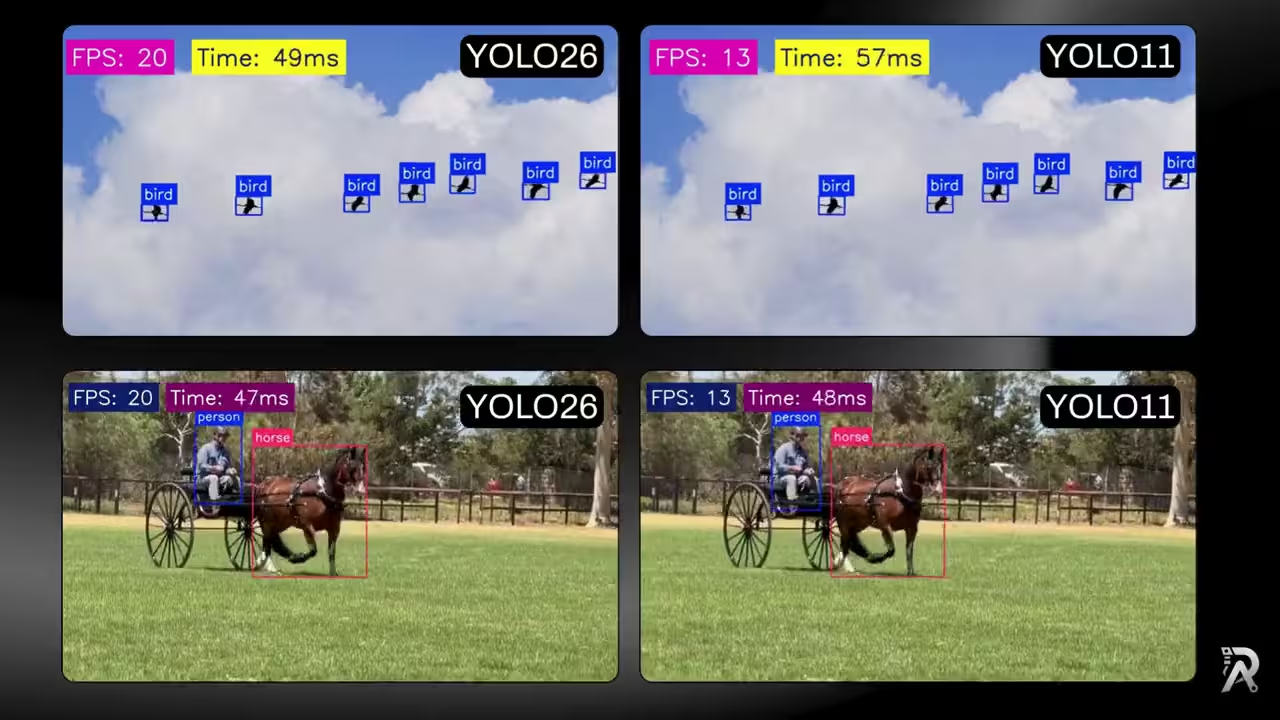
YOLO26 vs YOLO11: Real-time ONNX FPS benchmark in Python
Build one small, reusable class that runs Ultralytics YOLO26 and Ultralytics YOLO11 as ONNX models, draws clean detections, and overlays live FPS and latency so you can compare their real-time speed on the exact same footage.
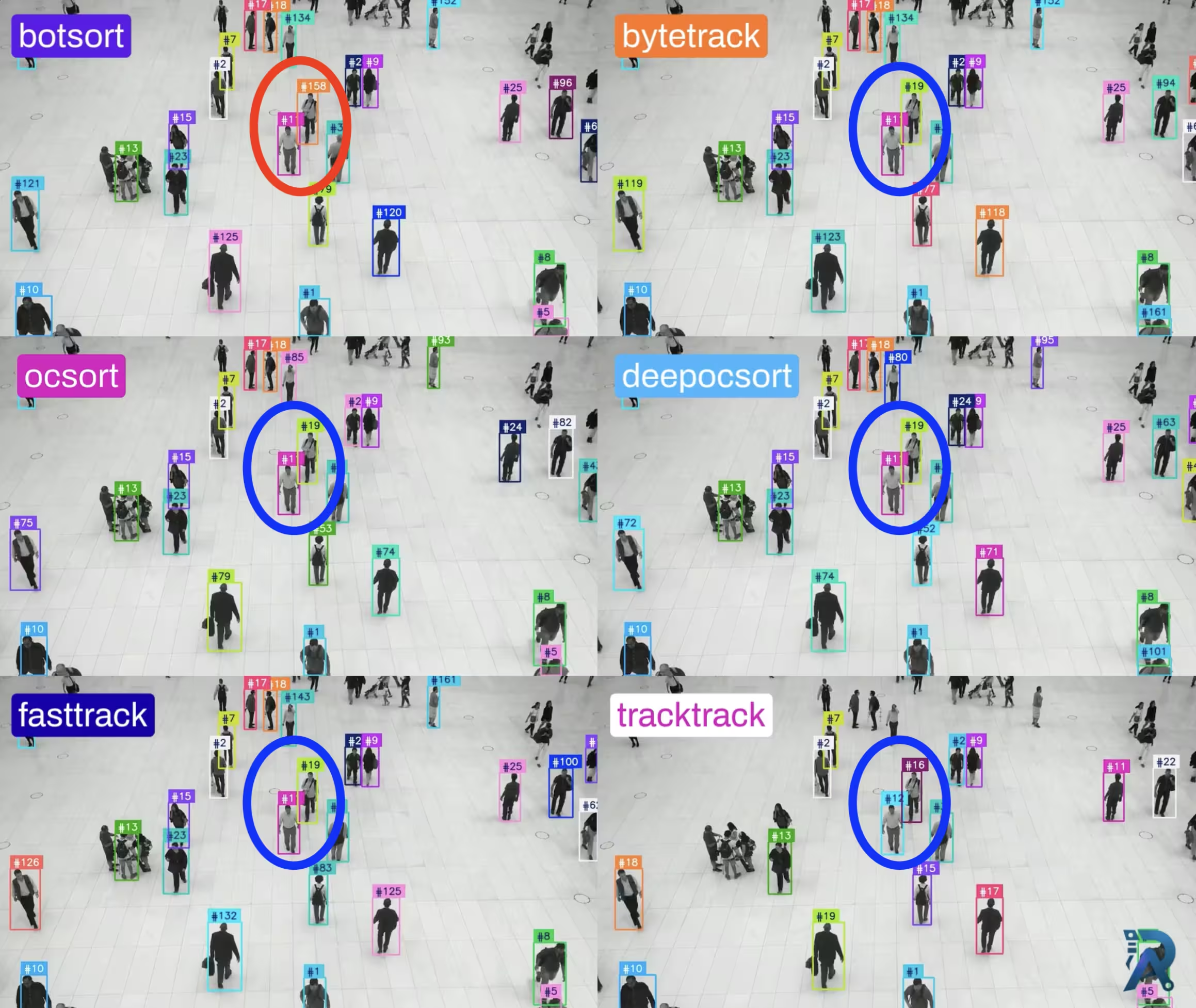
Ultralytics object trackers comparison: ByteTrack, BoT-SORT & More
How do the six Ultralytics trackers actually behave on the same footage? A look at BoT-SORT, ByteTrack, OC-SORT, Deep OC-SORT, FastTrack, and TrackTrack, their internals, trade-offs, and side-by-side results on ID switches, ID stability, and FPS.
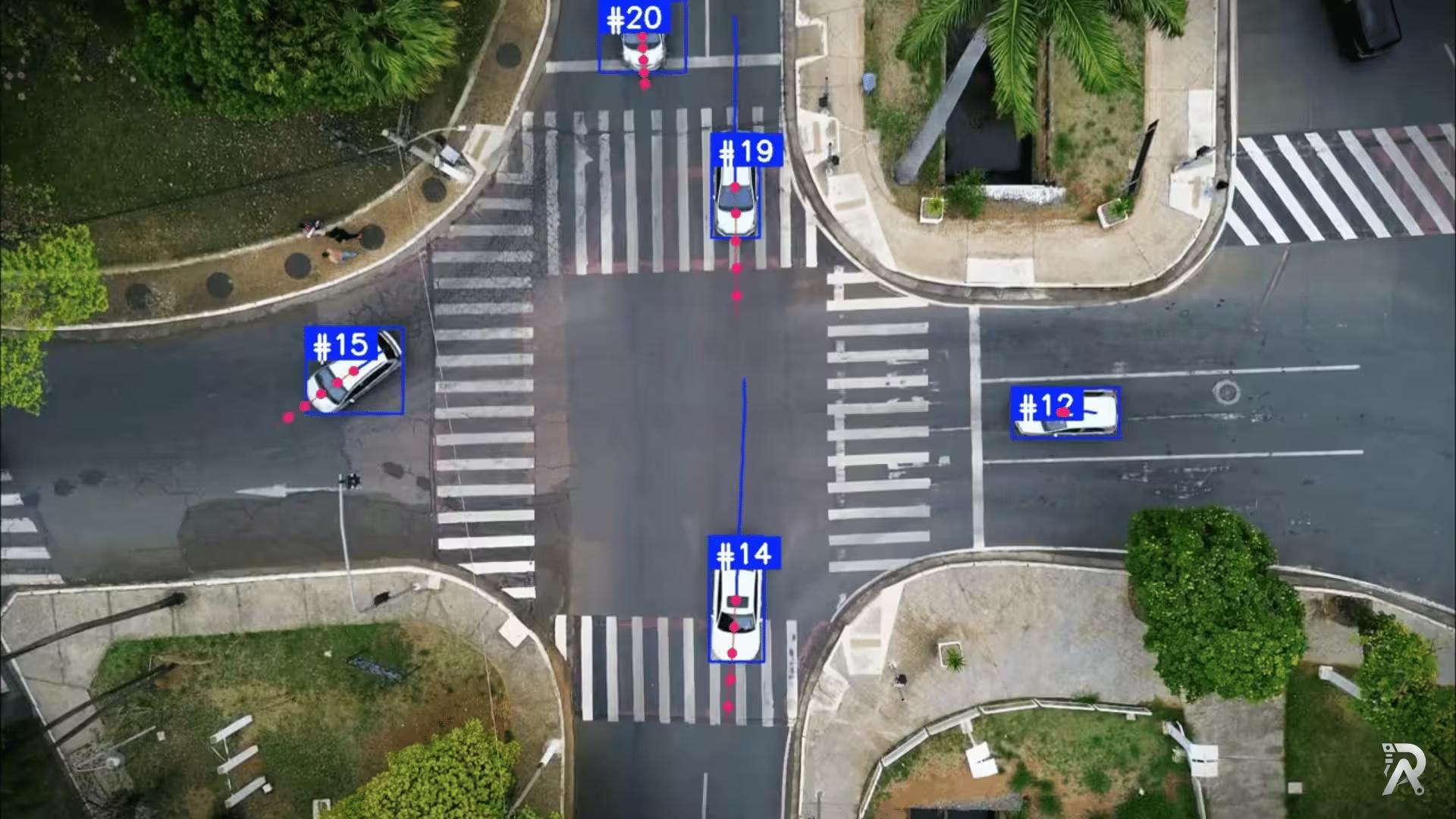
Object tracking and trajectory forecasting with YOLO26 and ByteTrack
Detect, track, and predict the future path of people and vehicles using Ultralytics YOLO26, ByteTrack, and a lightweight velocity-based forecasting model.
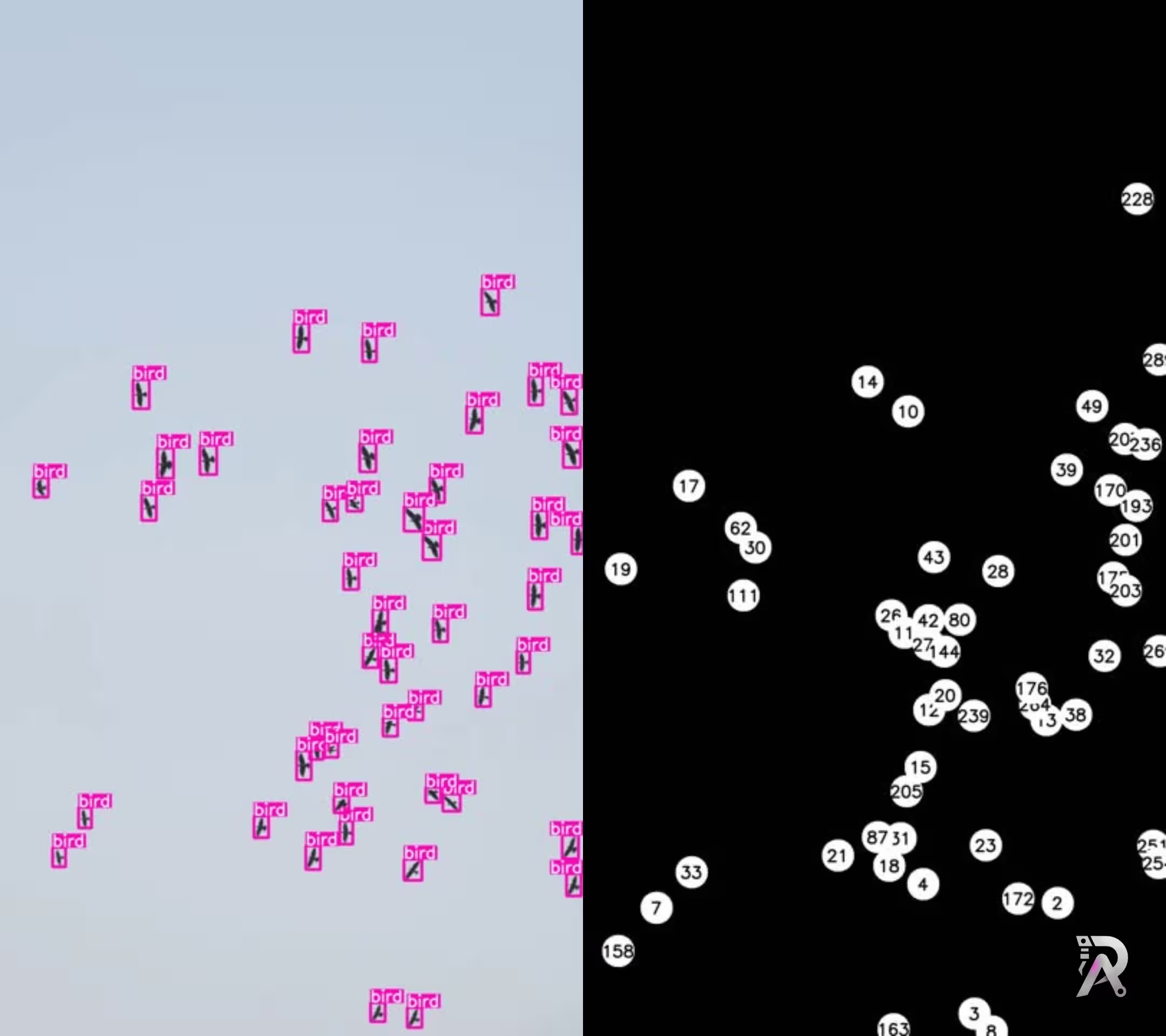
Real time bird detection and tracking using YOLO11
Learn how to detect and track birds using Ultralytics YOLO11 for real-time monitoring and ecological research through computer vision.
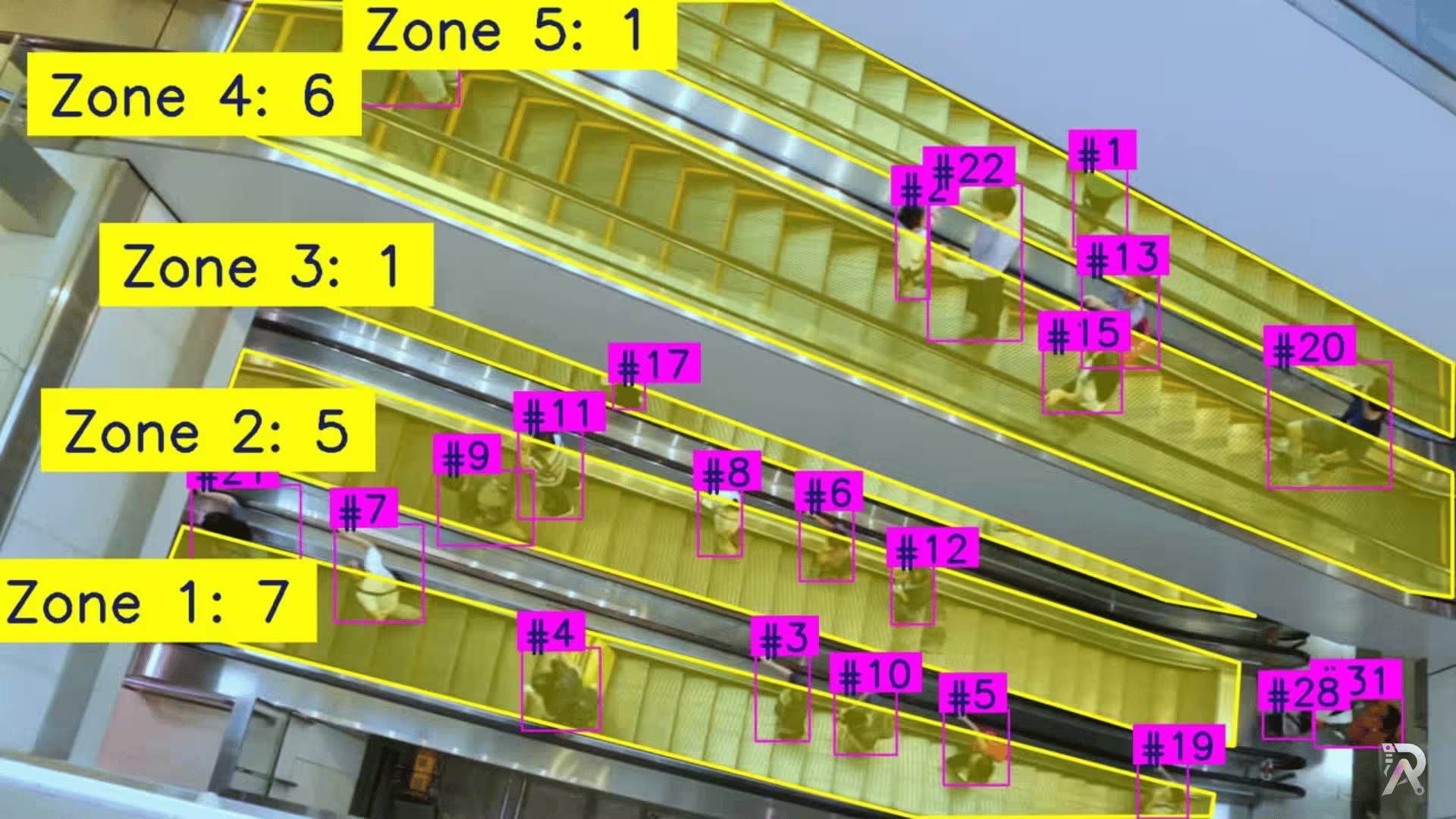
How to count people in zones with YOLO26 and OpenCV
A practical walkthrough of a compact Python script that detects, tracks, and counts people inside polygon zones using Ultralytics YOLO26 and OpenCV.
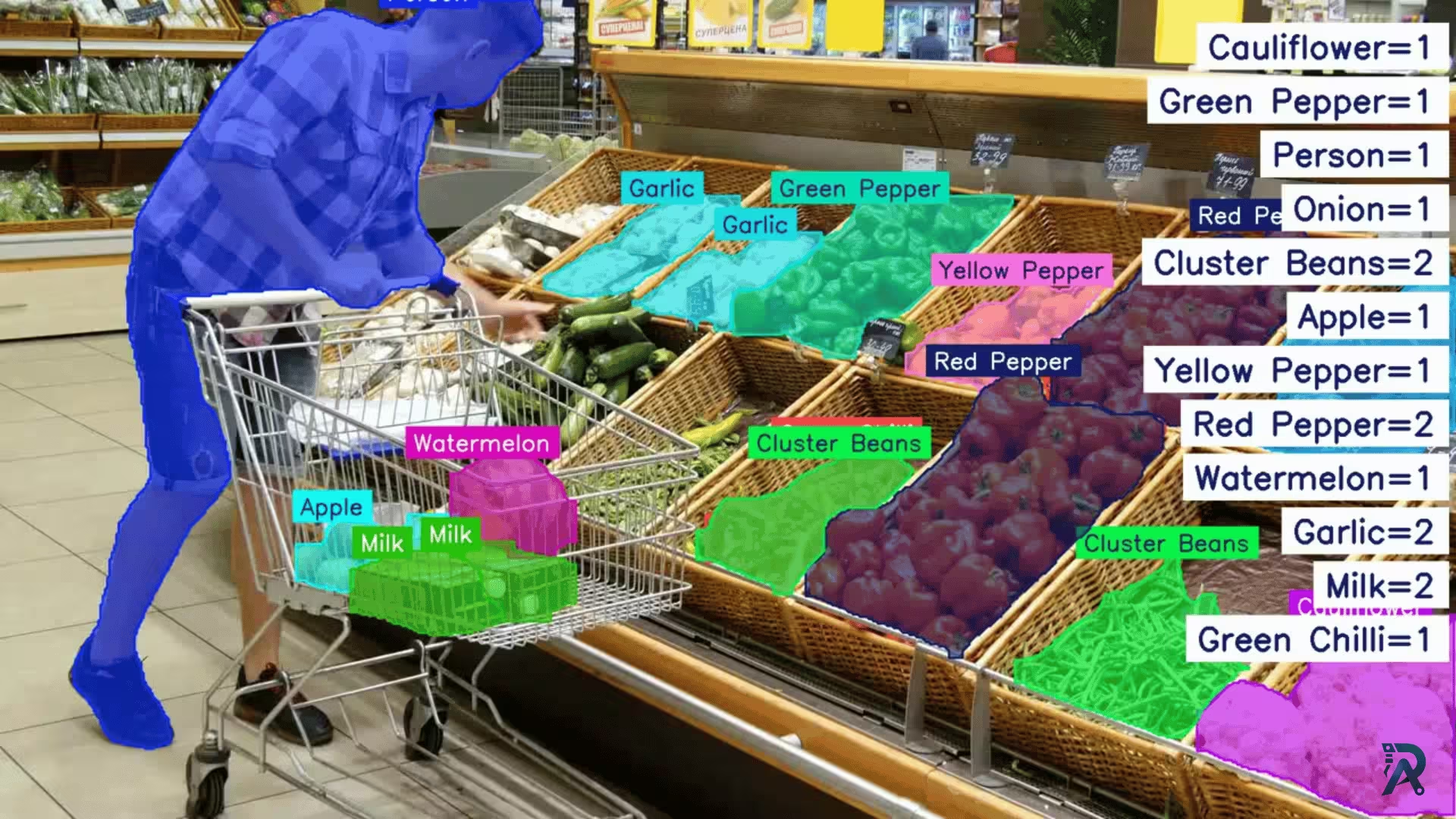
Supermarket items segmentation and counting with YOLO11
Discover how to achieve advanced items segmentation in supermarkets with Ultralytics YOLO11 for efficient object detection and analysis.
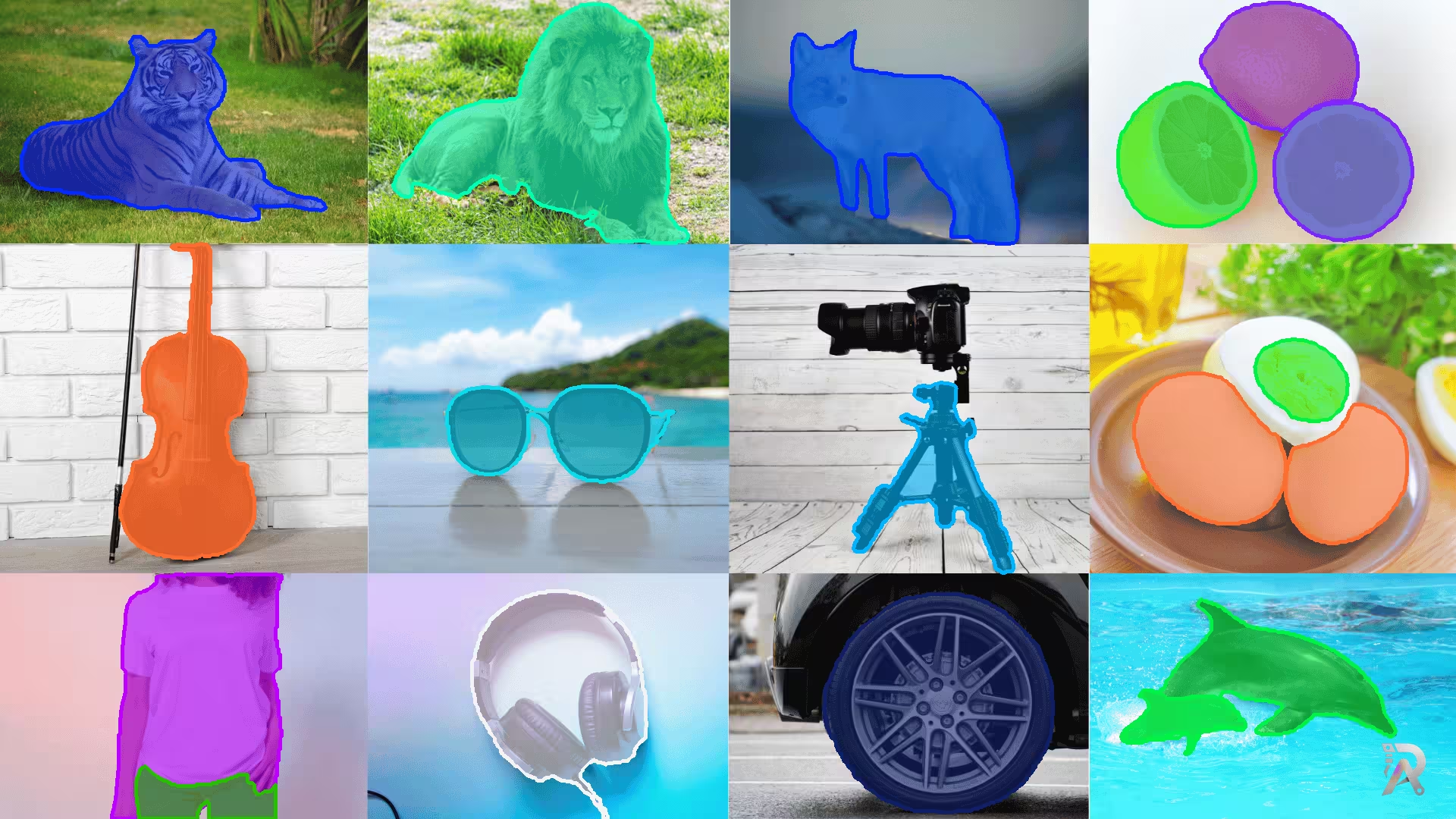
How to generate accurate segmentation masks using object detection and Meta SAM2
Learn how to generate segmentation masks with object detection and SAM2 models for advanced image processing tasks.
YOLO26 vs YOLO11: Real-time ONNX FPS benchmark in Python
Build one small, reusable class that runs Ultralytics YOLO26 and Ultralytics YOLO11 as ONNX models, draws clean detections, and overlays live FPS and latency so you can compare their real-time speed on the exact same footage.
Ultralytics object trackers comparison: ByteTrack, BoT-SORT & More
How do the six Ultralytics trackers actually behave on the same footage? A look at BoT-SORT, ByteTrack, OC-SORT, Deep OC-SORT, FastTrack, and TrackTrack, their internals, trade-offs, and side-by-side results on ID switches, ID stability, and FPS.
Object tracking and trajectory forecasting with YOLO26 and ByteTrack
Detect, track, and predict the future path of people and vehicles using Ultralytics YOLO26, ByteTrack, and a lightweight velocity-based forecasting model.
Real time bird detection and tracking using YOLO11
Learn how to detect and track birds using Ultralytics YOLO11 for real-time monitoring and ecological research through computer vision.
How to count people in zones with YOLO26 and OpenCV
A practical walkthrough of a compact Python script that detects, tracks, and counts people inside polygon zones using Ultralytics YOLO26 and OpenCV.
Supermarket items segmentation and counting with YOLO11
Discover how to achieve advanced items segmentation in supermarkets with Ultralytics YOLO11 for efficient object detection and analysis.
How to generate accurate segmentation masks using object detection and Meta SAM2
Learn how to generate segmentation masks with object detection and SAM2 models for advanced image processing tasks.
Frequently asked questions
- Which YOLO model is the most accurate?
- By published COCO mAP at a comparable size, YOLO26 leads (53.1 mAP for the medium model), just ahead of YOLO11 (51.5) and YOLOv9 (51.4). All numbers here are the authors' own published figures at 640px, not a re-run benchmark, so treat small gaps as ties and test on your own data.
- What is the difference between anchor-free and NMS-free?
- Anchor-free means the model predicts boxes directly instead of refining pre-set anchor boxes (YOLOv8 onward). NMS-free (end-to-end) goes further: the model outputs final detections with no Non-Maximum-Suppression post-processing step, which simplifies export and cuts latency. YOLOv10 and YOLO26 are NMS-free; YOLOv8, YOLOv9 and YOLO11 still use NMS.
- Should I use YOLO11 or YOLO26?
- YOLO11 is the safest default today: it has the largest community, the most tutorials, and covers all five tasks. YOLO26 is newer, posts higher published accuracy, and is NMS-free and DFL-free for cleaner edge and CPU deployment. Choose YOLO11 for maximum support, YOLO26 for a fresh build that wants the newest architecture.
- Are these mAP numbers directly comparable across models?
- They are indicative, not a controlled benchmark. Every figure is the authors' own published COCO val2017 mAP at 640px, but the families don't share the same size ladder (YOLOv9's smallest is 't', YOLOv7 has no 'medium', YOLOv5's numbers are the original anchor-based release). Use them to see the general tier, then benchmark the shortlist on your own hardware and data.
- Which YOLO license can I use commercially?
- Most models here are AGPL-3.0 (Ultralytics YOLOv5, YOLOv8, YOLOv10, YOLO11, YOLO26), which requires open-sourcing derivative network-served applications unless you buy an Ultralytics Enterprise license. YOLOv7 and the original YOLOv9 repo are GPL-3.0. Always check the license against your deployment before shipping.